Binary Options for Beginners and Where to Start
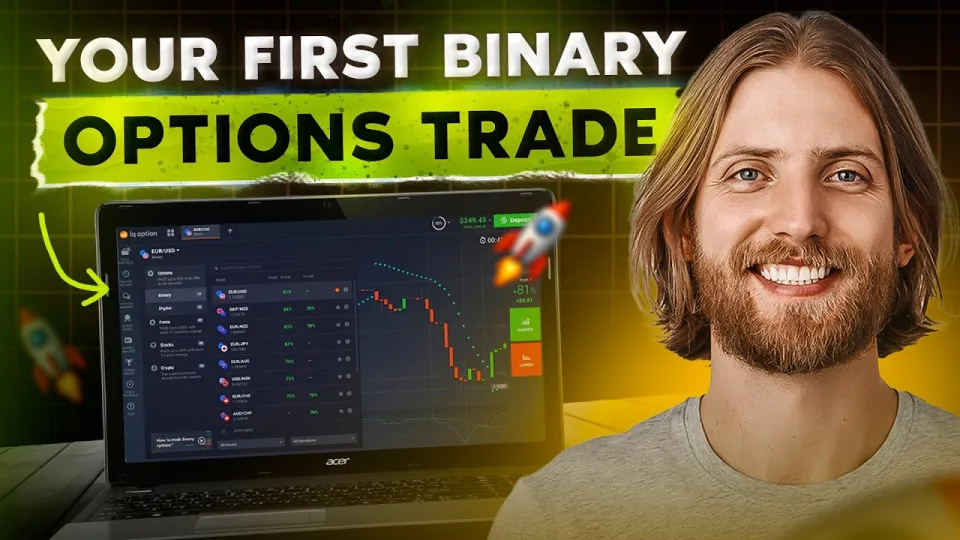
· based on the channel Binary options tutorial for beginners
Key takeaways
- A binary option is a fixed-payout contract: you predict whether an asset will be above or below the entry price when the expiry timer ends.
- Three platforms named in the source video are Quotex, Pocket Option and Binarium, all reachable through the links in the description.
- Payouts on binary platforms typically run around 70–90% on a win, while a loss costs 100% of the stake, so one loss needs more than one win to recover.
- Short expiries of 60 seconds to 5 minutes are the most common beginner setting and the most sensitive to spreads and noise.
- A VPN such as Nord VPN is offered in the video description, mainly for access and privacy, not as a trading advantage.
Binary options are fixed-risk contracts where you stake a set amount on whether a price will be higher or lower at a chosen expiry time; getting started means opening an account on a broker such as Quotex through the registration link from the video, funding it with a small amount, picking one asset and one short expiry, and placing trades no larger than 1–2% of the balance. Nothing about that process requires special knowledge, but the payout structure does require discipline.
How a binary option trade actually works
A binary option has only two outcomes, which is where the name comes from. You choose an asset (currency pair, gold, a stock index, sometimes crypto), a direction (up or down) and an expiry (anywhere from 60 seconds to a day or more). You enter a stake, the broker locks it, and when the timer ends the position closes automatically: if the price finished on the correct side of your entry, you receive the stake back plus a payout, usually quoted as a percentage such as 70–90%; if not, the stake is gone.
There is no partial exit and no stop loss inside the trade. The stake is the maximum loss by design, and the payout percentage is fixed before entry. That symmetry is the whole appeal and the whole problem: a 80% payout means a loss of 100 units requires a win of 125 units to break even, so a strategy needs a win rate above roughly 55% at that payout just to stay flat. Before placing anything, check the payout percentage on the asset and the exact expiry you intend to use, because both change the break-even math.
Binary options tutorial for beginners: a step-by-step start
Starting small and in a fixed order matters more than any indicator. A workable first sequence looks like this:
- Register on a platform and complete verification, since withdrawals are usually blocked until identity documents are approved.
- Deposit only money you can lose entirely — a common starting figure is the equivalent of $50–$100.
- Switch the account to a demo balance and place at least 20–30 trades to learn the interface: stake field, expiry selector, asset list, trade history.
- Pick one liquid asset and one expiry, for example EUR/USD on a 5-minute expiry, and stay with it for a week.
- Set a per-trade stake of 1–2% of the balance and a daily loss limit of 5–10%.
- Log every trade: time, direction, expiry, result. Review the log weekly instead of judging single trades.
Beginners who jump between five assets and three expiries in one session cannot tell whether an edge exists, because nothing is held constant. One asset, one expiry, one stake size is the only setup that produces readable data.
Choosing a binary options platform
The video points to three brokers: Quotex, Pocket Option and Binarium. Whatever platform you pick, compare them on the same four points: the payout range on major currency pairs, the minimum stake (often $1), the minimum deposit, and the withdrawal process — method, fee and processing time. A demo account is standard on all three, and it should be used before any real deposit.
Regulation is the point where binary options differ sharply from mainstream brokerage. In the European Union, retail binary options were banned by ESMA and the prohibition has been carried into national rules, so EU-facing brokers operate under offshore licences; the same is true in several other jurisdictions. That does not make every platform a scam, but it does mean there is no deposit insurance and no regulator to appeal to if a withdrawal is refused. Check where the entity holding your money is licensed, read the withdrawal terms before depositing, and test a small withdrawal early rather than after a long winning streak.
Position sizing and the math that decides survival
Risk per trade is the single variable a beginner fully controls. With a 1% stake, ten consecutive losses cost about 10% of the account; with a 10% stake, the same streak costs two-thirds of it. Since losing streaks of five to eight trades are normal even with a genuine edge, oversized stakes end accounts before the edge has time to show.
Work backwards from the payout. At 80%, break-even win rate is 1 / (1 + 0.8) ≈ 55.6%. At 70%, it is about 58.8%. Any honest test of a beginner strategy has to beat those numbers over at least 100 trades, not 10. Martingale-style doubling after a loss is popular in binary trading and mathematically fatal: a streak of six losses on a $1 base multiplies the next stake by 32, and the table limit or the balance runs out first.
Typical beginner doubts and mistakes
Most hesitation around binary options comes down to three things: how much to deposit, whether demo trading is worth the time, and why a trade that looked obvious still lost. The deposit question has a simple rule — an amount whose total loss changes nothing in your life. Demo trading is worth a few days, not a few months; the interface is simple, and the psychological difference of real money appears quickly.
The third doubt is the useful one. A trade that "looked obvious" usually relied on a chart pattern with no defined expiry logic. On a 60-second expiry, spread and random noise dominate any signal; on a 15-minute or 1-hour expiry, a level or trend has room to play out. Longer expiries also tend to carry slightly better payouts. Beginners who move from one-minute trades to 15-minute trades often find their results improve without any change in analysis.
All links from the video
- Quotex registration: https://dakaklik.com/_quotex?creative_id=WzzpYsjS3ps
- Pocket Option: https://dakaklik.com/_PocketOption?creative_id=WzzpYsjS3ps
- Binarium: https://dakaklik.com/_Binarium?creative_id=WzzpYsjS3ps
- Nord VPN: https://dakatop.link/Nord_us?creative_id=WzzpYsjS3ps
The VPN link is for access and privacy, for example when a broker's site is blocked in your region; it has no effect on trading results.
Conclusion
Binary options are simple to operate and hard to profit from: the mechanics take ten minutes to learn, while the payout structure demands a win rate above roughly 56% at an 80% payout. Start on demo, keep stakes at 1–2% of the balance, hold one asset and one expiry constant, and log every result so decisions rest on data rather than on a single session. The video breakdown on the channel Binary options tutorial for beginners walks through the same starting sequence for anyone who prefers to see the platform interface in action. When you are ready to open an account, use the Quotex sign-up link from the video and begin with the smallest deposit the platform allows.
Source: Binary Options | Binary Options Tutorial for Beginners | Where Should You Start? · Markdown version
Questions & answers
How much money do I need to start trading binary options?
Most brokers set a minimum deposit between $10 and $50, but the sensible starting amount is whatever you can lose completely without affecting your finances — commonly $50–$100. Keep each trade at 1–2% of that balance so a normal losing streak does not wipe the account.
Are binary options legal and regulated?
It depends on the jurisdiction. Retail binary options are banned for EU retail clients under ESMA rules carried into national law, and several other countries restrict them, so most brokers serving those regions operate on offshore licences. That means no deposit insurance, so verify the licensing entity and test a small withdrawal before committing more money.
Is a 60-second expiry a good place to start?
Usually not. Very short expiries are dominated by spread and random noise, which makes any analysis unreliable. Longer expiries of 15 minutes to an hour give a level or trend time to play out and often carry slightly higher payouts, which lowers the win rate you need to break even.
Why does one loss cost more than one win earns?
The payout is below 100%: at an 80% payout a win adds 80 units while a loss removes 100, so you need a win rate of about 55.6% just to break even. That is why doubling the stake after a loss (martingale) is dangerous — a short losing streak multiplies the required stake faster than most balances can absorb.